

Don’t have time to read the blog, watch and listen now!
School safety systems should simplify operations. Unfortunately, many districts discover the opposite. Technology that promises security can sometimes introduce new operational problems. Systems fail. Devices break. Software updates disrupt workflows. Instead of improving safety, the technology becomes another burden for already stretched teams. Tahoe-Truckee Unified School District faced this exact challenge.
Serving twelve schools across the North Lake Tahoe and Truckee region, the district needed dependable visitor management technology. What they had instead required constant troubleshooting.
By rethinking their approach and adopting a simpler platform, the district dramatically improved visitor management reliability in schools while reducing IT workload and strengthening daily operations.
Their experience offers valuable lessons for districts evaluating their own campus security systems.
When Visitor Systems Create More Problems Than They Solve
Tahoe-Truckee Unified School District supports schools across a wide geographic area in Northern California. Some campuses sit nearly thirty minutes apart.
The district’s technology team includes only ten staff members responsible for supporting every school site. That structure requires efficiency and reliability from every system they manage.
For years, the district relied on a Windows-based visitor management platform. On paper, it seemed capable of managing campus access. In practice, the system created ongoing disruptions.
The technology required frequent intervention from the IT department.
Updates to Windows machines regularly caused compatibility issues. Drivers needed constant maintenance. Kiosk machines occasionally failed, preventing visitors from signing in at all.
When these failures occurred, school office staff could not simply continue their workday. Instead, they had to call IT for assistance. Over time, the pattern became clear. The district was spending valuable time maintaining technology that should have been self-sustaining.
The technology team began searching for a solution that would improve visitor management reliability in schools without adding new operational complexity.
Evaluating a Better Visitor Management Solution
Replacing a districtwide safety system requires careful evaluation. Tahoe-Truckee followed its standard vendor comparison process and reviewed three potential visitor management providers.
Several factors influenced the decision:
- Ease of deployment
- System reliability
- Staff usability
- Quality of vendor support
- One vendor stood out early in the process.
Visitu, a Pikmykid brand, offered a simpler architecture and direct access to product leadership and support staff. That responsiveness gave the district confidence that issues would be addressed quickly if they arose.
Instead of committing immediately to a districtwide rollout, Tahoe-Truckee began with two pilot schools. The pilot allowed administrators, office staff, and IT personnel to evaluate real-world workflows before expanding across all campuses.
Once staff experienced the system’s reliability and ease of use, the district moved forward with a broader deployment across ten additional schools. The decision marked the beginning of a major improvement in visitor management reliability in schools across the district.
Simplifying Hardware to Improve System Reliability
One of the most important differences between the new system and the old one involved hardware. The previous visitor management setup relied on full Windows kiosk machines with multiple configurable components. Each component introduced another potential failure point. The new system dramatically simplified the equipment required at each campus.
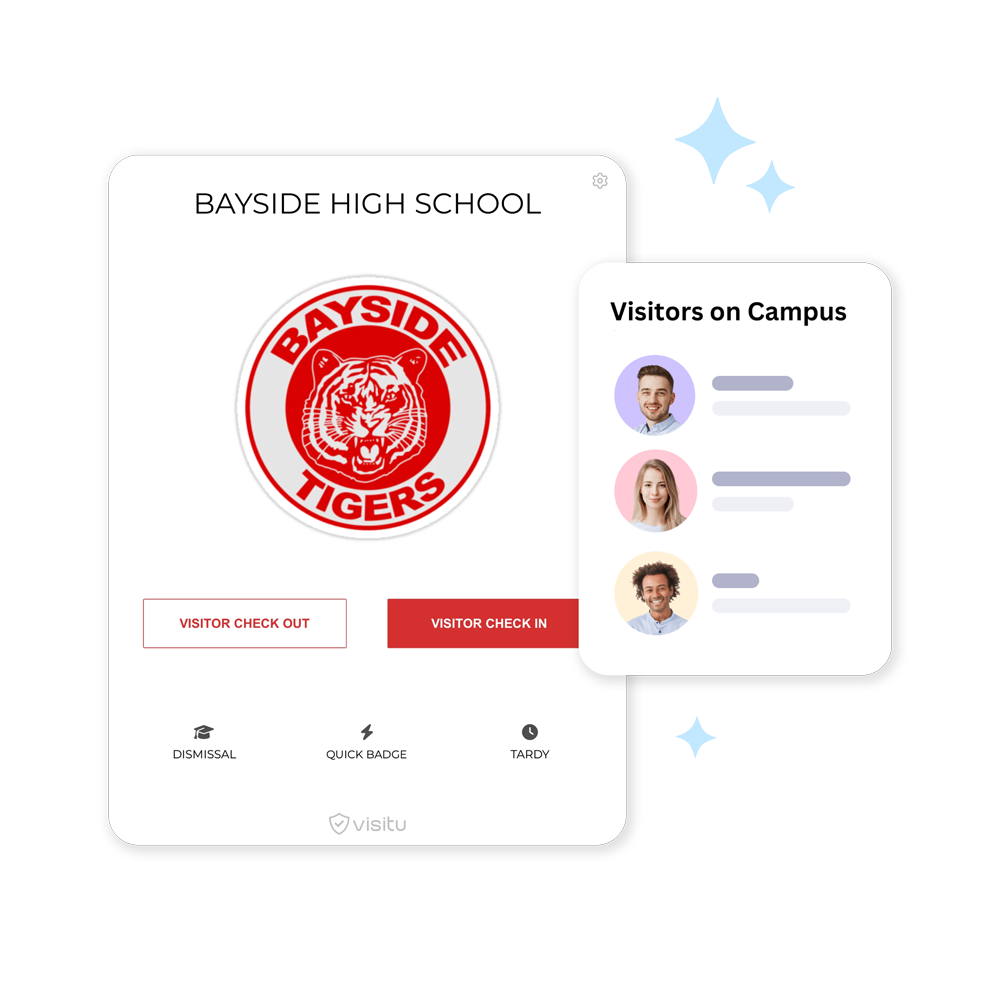
Instead of complex kiosks, schools now operate visitor check-in stations using:
- An iPad
- A charging stand
- A printer
This streamlined setup significantly reduced the number of variables that could cause outages. Fewer components meant faster setup and far less ongoing maintenance.
For the district’s technology team, the change was immediate and noticeable. Systems that once required frequent troubleshooting now operated consistently throughout the school day.
The improvement strengthened visitor management reliability in schools while freeing the IT team to focus on higher-priority initiatives.
A Better Experience for Front Office Staff
Technology only works when the people using it trust it. Initially, some district staff approached the new visitor management system cautiously. Years of dealing with glitches had created skepticism about whether any platform could truly solve the problem.
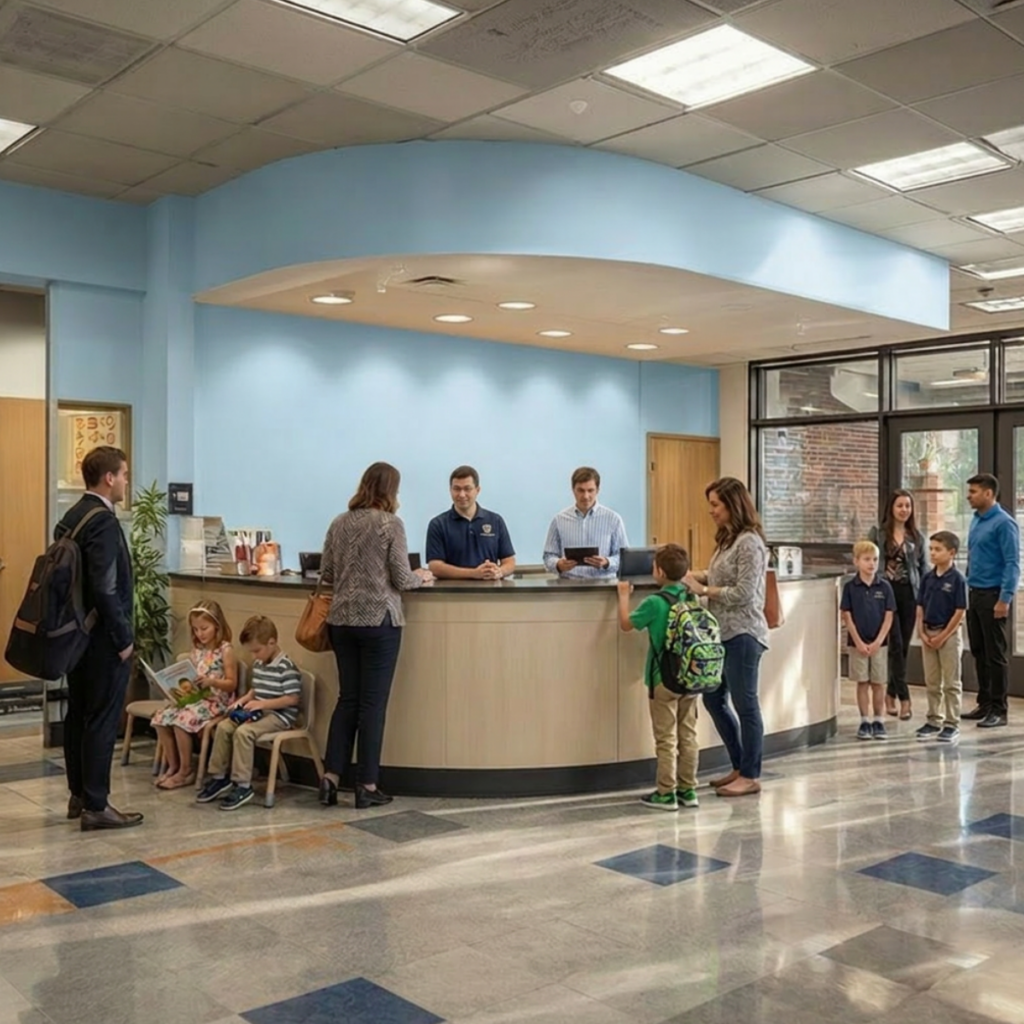
Training and onboarding played an important role in building confidence. Once office staff began using the new system, the difference became clear. Visitors could check in smoothly without encountering system outages. Office staff could quickly look up visitors, approve access, and monitor activity from the dashboard.
Processes that previously required multiple steps or technical support now took only seconds. The front office environment changed from reactive troubleshooting to smooth daily operation.
Reliable technology transformed the visitor management process into something staff could depend on rather than work around. This reliability became another important step toward improving visitor management reliability in schools throughout the district.
Real-Time Alerts Strengthen Campus Safety
Beyond reliability, the new system also improved visibility and accountability. The district now uses automated alerts and dashboards to track visitor activity in real time.
For example:
- Principals receive email alerts when flagged visitors attempt to check in.
- The technology team receives notifications when vendors sign in on campus.
- Staff can instantly view who is currently present on school grounds.
- These capabilities extend the value of visitor management beyond simple sign-in records.
They provide situational awareness that can support both daily operations and emergency preparedness. During drills, administrators can quickly review who is on campus and confirm whether anyone still needs to be accounted for.
This real-time visibility reinforces the district’s safety protocols while strengthening visitor management reliability in schools across every campus.
Small Moments That Show Technology Is Working
One unexpected indicator of success came from a recurring moment in the district’s daily operations. A continuation school student frequently signs in as a “technology vendor,” triggering alerts to the IT team.
Over time, the event became a lighthearted joke among staff. Yet the moment illustrates something important. Alerts that once might have been ignored or delayed now arrive instantly and consistently. Staff notice them because the system works reliably.
Even small operational details reflect the larger success of improving visitor management reliability in schools.
Lessons for Districts Evaluating Visitor Management Systems
Tahoe-Truckee Unified School District now encourages other districts to carefully evaluate the operational realities of visitor management technology.
Their experience highlights several lessons.
Prioritize Simplicity
Systems with fewer moving parts require less maintenance and create fewer disruptions. Simple hardware setups can dramatically improve visitor management reliability in schools.
Evaluate Staff Workflows
Front office staff interact with visitor systems throughout the day. Testing real-world workflows helps ensure the system supports daily operations rather than complicating them.
Assess Vendor Support
Reliable support teams can make a major difference when questions arise. Direct communication with knowledgeable staff often prevents small issues from becoming major problems.
Pilot Before Expanding
Testing systems at a few campuses first allows districts to evaluate performance before committing districtwide. Pilot programs often reveal practical insights that vendor demos cannot provide.
A More Reliable Future for School Visitor Management
Since implementing the new visitor management system, Tahoe-Truckee Unified School District has experienced consistent performance across its campuses.
The transition later continued smoothly when Visitu became part of the Pikmykid platform. Communication remained clear, support quality remained strong, and staff workflows continued uninterrupted. Read the full Tahoe-Truckee Case Study.
For the district’s technology team, the biggest change has been the reduction in maintenance demands. Systems that once generated frequent service calls now operate quietly in the background. Front office staff spend less time troubleshooting technology and more time supporting students and families.
Administrators gain clearer visibility into campus activity. Most importantly, the district strengthened visitor management reliability in schools, ensuring that safety technology consistently supports the people responsible for protecting students.
For districts evaluating their own systems, Tahoe-Truckee’s experience demonstrates an important principle. The most effective school safety technology often isn’t the most complex. It’s the technology that works—every day—without creating new problems.
FAQ: Visitor Management Reliability in Schools
Why is visitor management reliability important for schools?
Reliable visitor management systems ensure that all campus visitors are properly screened and recorded. Consistent operation prevents security gaps and reduces operational disruptions for school staff.
How does technology improve visitor management reliability in schools?
Modern visitor management systems automate check-in workflows, track visitor activity in real time, and send alerts to administrators when needed. These features improve accountability and campus visibility.
What hardware works best for visitor management systems?
Reliable visitor management systems prioritize simplicity. Many modern platforms use tablet-based kiosks instead of complex desktop hardware to minimize maintenance and reduce system failures. Visitu, for example, operates with a streamlined setup that includes an iPad kiosk, charging stand, and printer, allowing schools to maintain consistent check-in processes with fewer technical disruptions.
How can districts evaluate visitor management systems effectively?
Districts should test real-world workflows, evaluate vendor support quality, pilot systems at select campuses, and prioritize solutions that minimize technical complexity.