


Why Manual Attendance No Longer Works
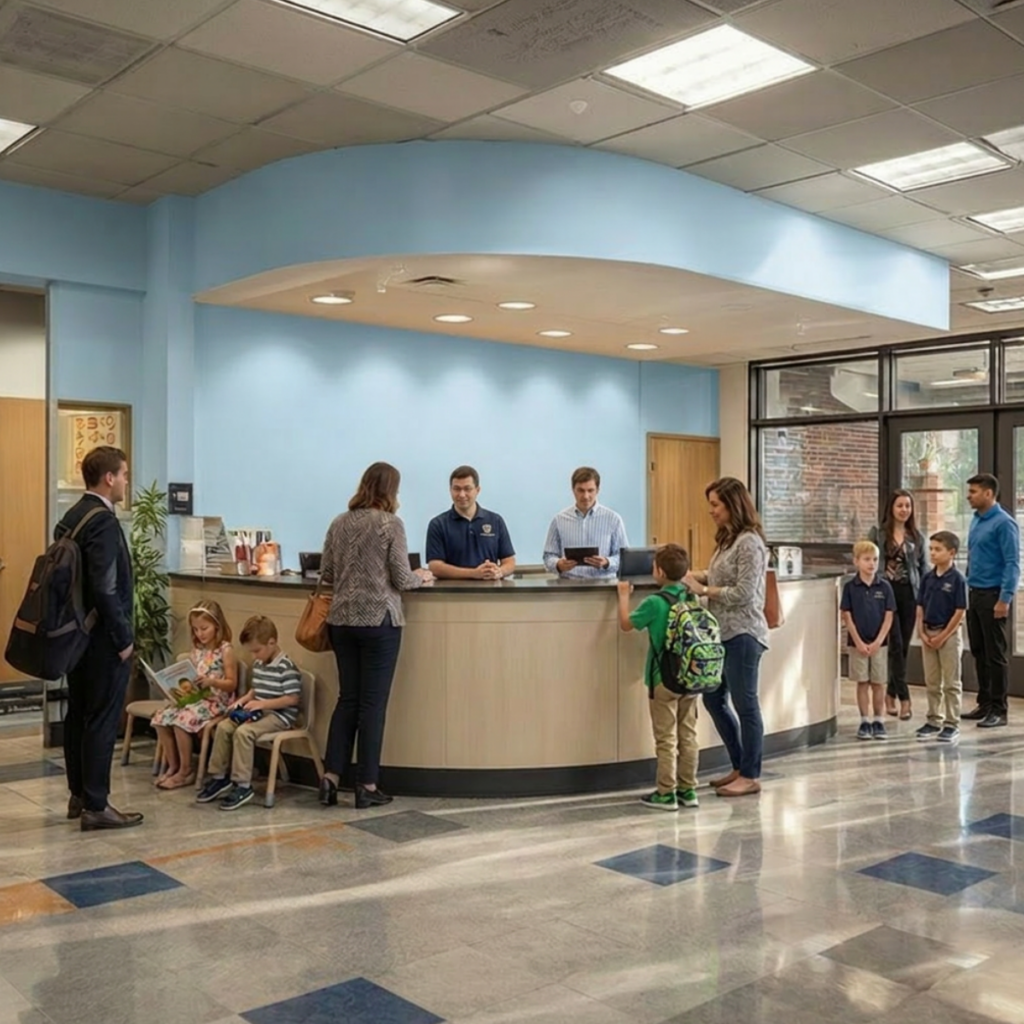
Walk into a school front office during morning arrival, and the pressure builds quickly. Phones ring with absence calls, parents report late arrivals, and staff attempt to reconcile who has not shown up. Manual attendance tracking struggles to keep pace with this reality, especially when information arrives from multiple sources at different times.
Paper logs, delayed updates, and disconnected systems create gaps in visibility. Those gaps are not just inconvenient. They create uncertainty around who is actually on campus. In today’s environment, that uncertainty directly impacts safety, communication, and operational flow.
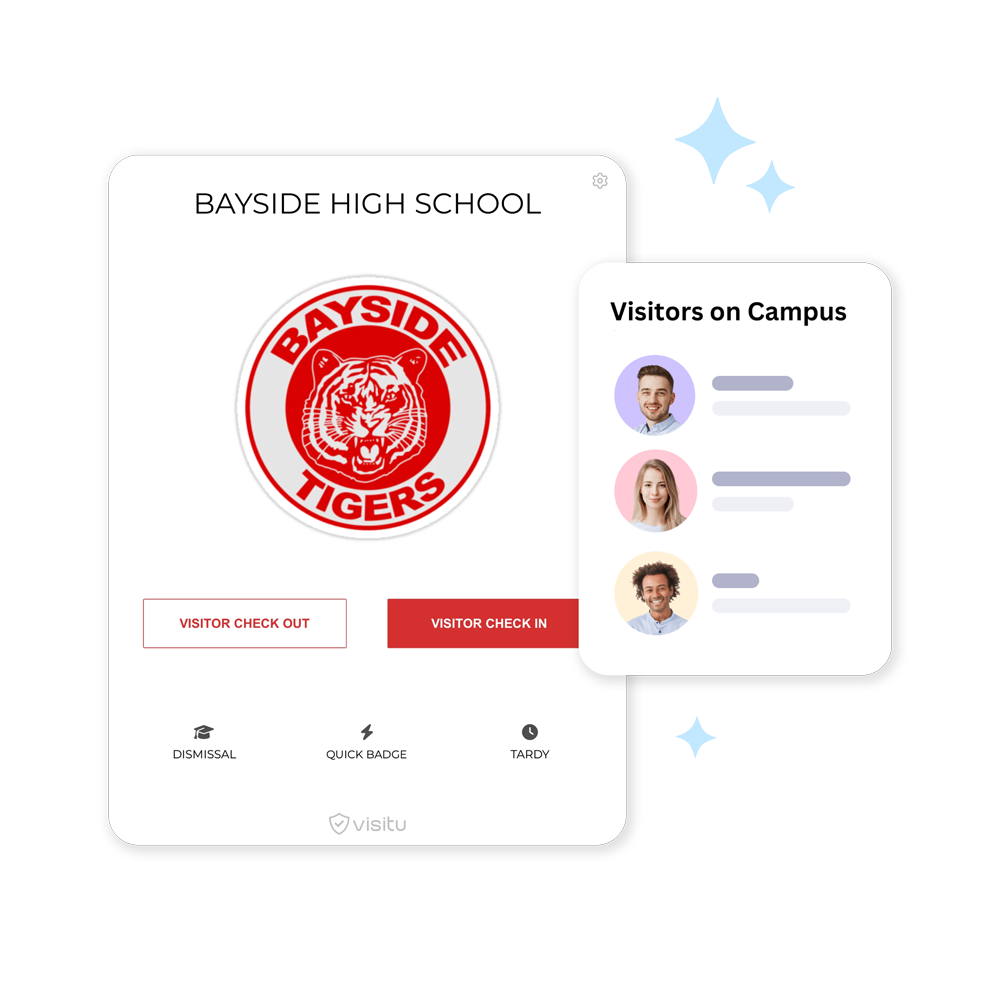
Schools no longer need more paperwork. They need clarity. This is where student attendance automation for schools shifts the role of attendance from reactive tracking to real-time awareness. Instead of chasing information, schools can see it as it happens. Solutions like Visitu focus on arrival patterns, tardies, and no-shows, giving front office teams the visibility they need to manage the school day with confidence.
Benefit #1: Accurate and Real-Time Visibility into Tardies and No-Shows
Accuracy in attendance is not just about marking presence. It is about knowing who has not arrived and when. Manual processes often rely on delayed inputs, which leaves staff guessing until information is confirmed.
Automated attendance tracking changes this by capturing tardies and no-shows in real time. As students arrive late or fail to check in, the system reflects those updates immediately. Administrators no longer wait for reconciliation at the end of the period or rely on fragmented communication.
This level of visibility allows front office teams to act faster and with greater confidence. They can follow up on missing students, confirm arrival patterns, and maintain a clear picture of campus activity. The benefits of automated attendance systems begin with this immediate awareness, because without it, schools operate with unnecessary uncertainty.
Benefit #2: Stronger Campus Safety Through Real-Time Awareness
Safety depends on knowing who is expected and who is missing. Manual attendance processes create blind spots, especially during arrival windows when information is still being gathered.
Digital attendance management removes those blind spots by providing a real-time view of student status. Schools can quickly identify students who have not arrived and take appropriate action. This is especially important when a student is expected but never checks in.
Attendance becomes a critical layer of campus safety, not just a reporting function. When combined with other safety systems, it strengthens a school’s ability to respond quickly and accurately. The benefits of automated attendance systems extend directly into emergency readiness, where clarity and speed matter most.
Benefit #3: Reduced Front Office Workload and Operational Friction
Front office teams manage one of the most complex workflows in a school. They handle calls, verify absences, track late arrivals, and respond to parent questions, often all at once. Manual processes make this even more difficult by requiring constant updates and follow-ups.
Student attendance automation for schools reduces this burden by centralizing information in one place. Instead of juggling calls and paper logs, staff can quickly see who has checked in, who is late, and who is absent.
This reduces the need for repeated verification and manual tracking. It also minimizes interruptions throughout the day. Time-saving school technology allows front office staff to focus on managing the flow of the school instead of chasing data.
Benefit #4: Clearer Parent Communication and Fewer Inbound Calls
Communication gaps often begin with attendance uncertainty. When parents do not receive timely updates, they call the school to confirm whether their child arrived or was marked absent.
Manual systems delay this communication, which increases confusion and workload. Digital attendance software improves this experience by triggering timely notifications for tardies and absences.
Parents receive clear, immediate updates without needing to contact the school. This reduces inbound calls and creates a more predictable communication flow. It also builds trust, because parents feel informed rather than uncertain.
The benefits of automated attendance systems include stronger, more transparent relationships between schools and families. Communication becomes proactive instead of reactive.
Benefit #5: Early Identification of Attendance Patterns and Risks
Attendance is one of the earliest indicators of potential student challenges. However, manual systems often delay visibility into patterns because data is scattered or incomplete.
Automated attendance tracking brings these patterns into focus. Schools can quickly identify repeated tardiness, frequent absences, or emerging no-show trends. This allows administrators to address issues earlier, before they escalate.
Instead of reacting weeks later, schools can intervene in real time. This shift supports both student success and operational consistency. Digital attendance management transforms attendance into a source of insight rather than just a record.
The benefits of automated attendance systems include the ability to act sooner and with greater precision.
Benefit #6: Seamless Integration with Existing School Systems
Schools already rely on multiple systems to manage student data. When attendance tracking exists outside those systems, it creates duplication and inconsistency.
Modern attendance solutions integrate with SIS platforms to ensure data flows seamlessly. This reduces the need for manual entry and eliminates discrepancies between systems.
Front office staff and administrators can rely on a single, consistent data set. This improves reporting accuracy and simplifies compliance requirements.
The benefits of automated attendance systems include stronger alignment across systems and fewer operational breakdowns caused by disconnected tools.
Benefit #7: Scalable Processes That Support School Growth
As schools grow, operational complexity increases. More students mean more arrivals, more exceptions, and more communication needs. Manual attendance processes do not scale effectively in this environment.
Automated systems provide consistent processes regardless of size. Whether a school manages hundreds or thousands of students, the system adapts without increasing administrative burden.
This scalability allows schools to maintain consistency across campuses and over time. It also ensures that attendance processes remain reliable as policies and expectations evolve.
The benefits of automated attendance systems extend beyond efficiency. They create a foundation for sustainable operations as schools grow and change.
Why Attendance Automation Is a Smart Investment
Attendance is often viewed as a routine task, but it plays a critical role in daily operations. It influences safety, communication, and the overall flow of the school day.
Manual systems no longer support the level of visibility schools need. They create delays, uncertainty, and unnecessary workload for staff.
Automation shifts attendance from reactive tracking to real-time awareness. It improves accuracy around tardies and no-shows, strengthens safety, and reduces operational friction. It also enhances communication with families and provides insight into attendance patterns.
The benefits of automated attendance systems are both immediate and long-term. Schools gain clarity, consistency, and confidence in their daily operations.
For a deeper understanding of how attendance systems support broader school operations, explore the full guide.
Modern schools do not need more processes. They need better visibility. Attendance automation delivers exactly that.
Frequently Asked Questions
What are the benefits of automated attendance systems?
Automated attendance systems provide real-time visibility into tardies and absences, improving safety, communication, and operational efficiency.
Why do schools need digital attendance software?
Schools need digital attendance software to track no-shows and late arrivals accurately while reducing manual workload and communication gaps.
How does attendance automation improve school safety?
Attendance automation helps schools identify missing students quickly and maintain real-time awareness during the school day.
Can attendance systems integrate with SIS platforms?
Yes, modern attendance systems integrate with SIS platforms to ensure consistent data and reduce duplicate entry.