


Why Are Schools Replacing Manual Visitor Logs With Digital Visitor Management Systems?
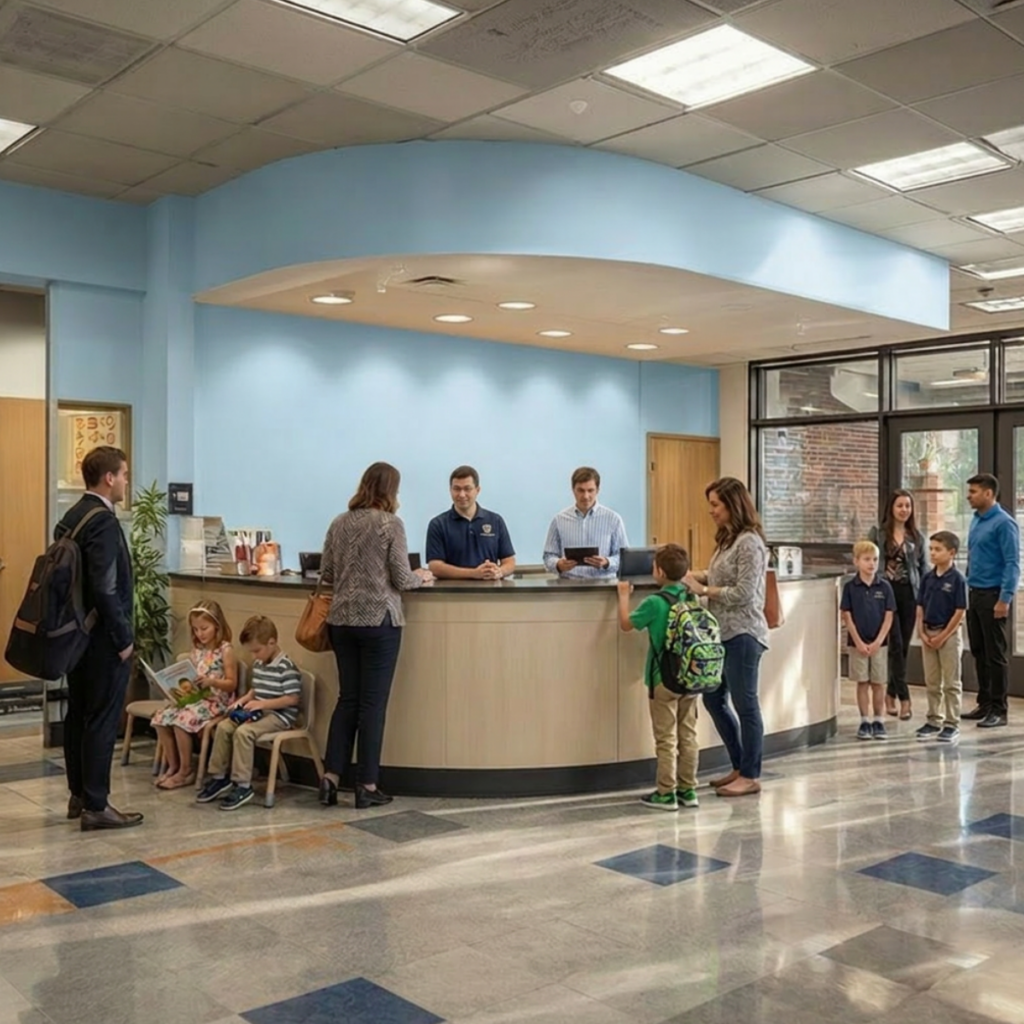
The front office has become one of the most important security checkpoints on a school campus. Every day, schools manage a steady flow of parents, volunteers, contractors, substitute teachers, vendors, and community guests entering buildings throughout the day. What once seemed like a simple administrative process has evolved into a major operational and safety responsibility.
For years, schools relied on paper sign-in sheets and handwritten visitor badges to manage campus guests. Those systems worked in a time when visitor expectations, compliance requirements, and school safety concerns looked very different. Today, however, schools need far greater visibility into who is entering campus, why they are there, and whether they have been properly authorized.
Manual visitor logs create significant operational blind spots. Names may be illegible. Information may be incomplete. Visitors can accidentally bypass procedures during busy periods. Most importantly, schools often lack real-time awareness of who remains on campus at any given moment.
Those gaps become even more concerning during emergencies.
If a lockdown, evacuation, or reunification event occurs, administrators need accurate information immediately. They cannot afford to search through clipboards or incomplete records while coordinating emergency response efforts.
That reality is why visitor management systems for schools have become an essential part of modern campus safety strategies.
Digital visitor management platforms help schools improve security, streamline front office workflows, strengthen visitor accountability, and create safer environments for students and staff. At the same time, they also improve the experience for parents and guests by creating faster and more organized visitor check-in processes.
Schools are no longer treating visitor management as a simple office task. They are recognizing it as a critical operational function tied directly to campus safety and emergency preparedness.
What Is a Visitor Management System for Schools?
A visitor management system for schools is a digital platform that helps schools securely register, verify, track, and monitor campus visitors in real time.
Instead of relying on handwritten sign-in sheets, schools use digital workflows that create structured visitor records and improve campus visibility. These systems are designed to help schools know exactly who is on campus, where visitors are expected to be, and when they entered or exited the building.
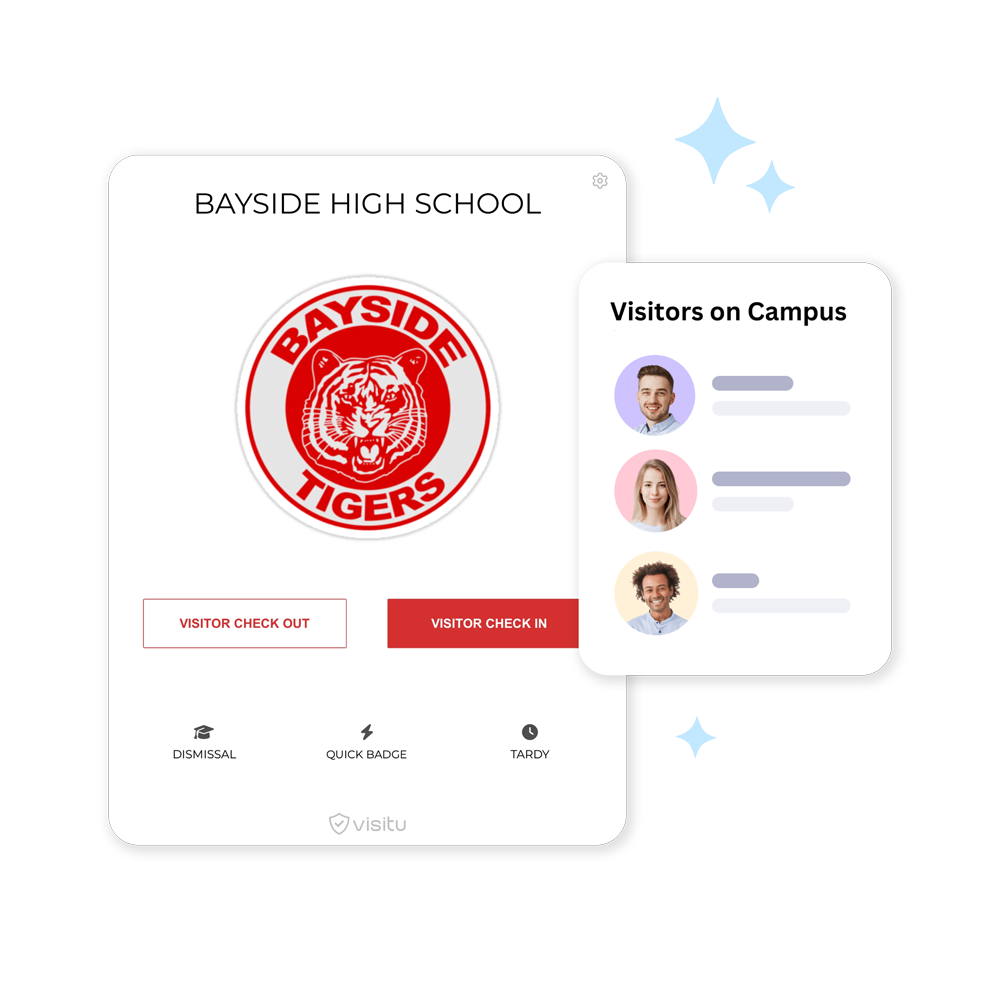
Most visitor management systems for schools begin with a digital visitor check-in process. Visitors typically use a kiosk, tablet, or mobile device to register upon arrival. The system may then scan a government-issued ID, verify visitor information, print a visitor badge, and log the visit automatically.
Within seconds, the school has a secure digital record tied to that individual visitor.
Modern systems often include:
- Visitor registration and digital check-in
- Government-issued ID scanning
- Visitor verification and screening
- Instant badge printing
- Real-time visitor tracking
- Emergency visibility dashboards
- Visitor reporting and audit logs
- Integration with school safety systems
Many schools are also integrating visitor management into broader campus safety ecosystems. Platforms like Visitu and solutions connected through Pikmykid help schools unify visitor operations with emergency communication, attendance management, and school safety workflows.
The goal is not simply to modernize check-in procedures. The goal is to create greater accountability, visibility, and operational coordination across the campus environment.
Why Are Manual Visitor Logs a Security Risk for Schools?
Paper visitor logs create several challenges that make them difficult to support in modern school environments.
The biggest issue is visibility.
When schools rely on clipboards or paper sign-in sheets, administrators often lack accurate real-time information about campus visitors. A person may sign in at the office, but staff still may not know whether that visitor has left the building or moved to another area of campus.
Documentation quality also becomes inconsistent. Handwritten entries are frequently incomplete or difficult to read. Retrieving historical visitor records can become time-consuming and unreliable.
Manual systems also create verification concerns. Schools cannot easily confirm whether visitors are providing accurate information. Without ID verification or screening tools, unauthorized individuals may gain access more easily than schools realize.
Operationally, manual workflows slow down front office teams as well. Staff members spend valuable time managing repetitive tasks, especially during high-traffic periods like morning arrivals, parent conferences, or school events.
Most importantly, paper systems create major challenges during emergencies.
If schools need to account for everyone on campus during a lockdown or evacuation, incomplete visitor records can slow emergency coordination and create confusion.
Digital visitor management systems for schools solve these issues by improving accountability, verification, and real-time awareness throughout the school day.
How Do Visitor Management Systems Improve School Safety?
School safety depends heavily on visibility and accountability.
Schools cannot effectively secure their campuses if they do not know who is entering buildings or moving throughout the campus environment. Visitor management systems for schools help close those visibility gaps by creating structured, trackable visitor workflows.
One of the most important safety benefits is visitor verification. Schools can scan government-issued IDs to confirm visitor identities before granting access. Many systems also support watchlist screening and alert notifications that immediately notify administrators if a flagged individual attempts to check in.
This proactive visibility helps schools identify potential concerns before situations escalate.
Real-time visitor tracking also strengthens campus awareness. Administrators and office staff can instantly view active visitors on campus, including arrival times, destinations, and visitor status.
That visibility becomes especially important during emergencies.
During evacuations, lockdowns, or reunification events, schools need accurate information quickly. Digital visitor logs help administrators identify who may still be inside the building and where those individuals were expected to be located.
Visitor management systems for schools also improve coordination between front office staff, school safety teams, and district leadership by centralizing visitor information into one accessible system.
As schools continue strengthening layered safety strategies, visitor management is increasingly becoming a foundational part of emergency preparedness planning.
What Features Should Schools Look for?
Not all visitor management systems offer the same capabilities. Schools evaluating platforms should focus on solutions that support both security and operational efficiency.
Digital visitor registration is one of the most important features. Schools should look for systems that streamline check-in while maintaining accurate visitor records.
ID verification capabilities are equally important. Scanning government-issued identification helps schools confirm visitor identities quickly and consistently.
Instant badge printing also plays a major role in improving campus visibility. Visitor badges help staff identify authorized guests immediately while reinforcing structured visitor procedures throughout the campus.
Many visitor management systems for schools now include watchlist screening and alert functionality as well. These features provide immediate notifications if restricted individuals attempt to access campus.
Real-time visitor dashboards are another valuable capability. Administrators should be able to quickly view who is currently on campus without relying on manual records.
Integration capabilities matter significantly too. The strongest visitor platforms integrate with:
- Student Information Systems (SIS)
- Emergency communication tools
- Access control systems
- School safety platforms
- Attendance management solutions
Integrated systems reduce duplicate work while improving operational coordination across departments.
Pre-registration features can also improve efficiency during school events, parent meetings, or scheduled campus visits. Visitors can complete portions of the registration process before arrival, helping schools reduce front office congestion.
Ultimately, the best visitor management systems for schools improve both daily operations and emergency readiness simultaneously.
How Do Visitor Management Improve Front Office Operations?
While school safety often drives purchasing decisions, operational efficiency quickly becomes one of the most noticeable benefits after implementation.
Front office staff manage constant interruptions throughout the school day. Parents arrive unexpectedly. Vendors check in for deliveries. Volunteers move in and out of classrooms. Contractors visit campuses for scheduled work orders.
Without structured workflows, these interactions create delays, congestion, and administrative stress.
Digital visitor management helps simplify these responsibilities.
Visitors can complete much of the registration process independently through kiosks or mobile devices. Automated workflows reduce repetitive data entry tasks while improving record accuracy.
This creates faster visitor check-ins and allows office staff to focus on higher-value responsibilities instead of managing paperwork manually.
Schools also benefit from centralized visitor reporting. Administrators no longer need to sort through filing cabinets or paper records to locate visitor information. Historical records become searchable and accessible instantly.
During busy periods like school performances, assemblies, or parent-teacher conferences, visitor management systems for schools help reduce front office bottlenecks while maintaining structured security procedures.
The result is a more organized and professional visitor experience across the campus environment.
How Does Visitor Management Support Emergency Response?
Emergencies create rapidly changing situations where accurate information matters immediately.
Whether schools are responding to severe weather, medical emergencies, evacuations, lockdowns, or reunification scenarios, administrators need visibility into everyone on campus — including visitors.
Visitor management systems for schools provide that visibility in real time.
Administrators can quickly identify:
- Active campus visitors
- Visitor destinations
- Check-in times
- Visitor status
- Individuals who may still be inside buildings
This information supports faster coordination between school staff and emergency responders.
Visitor management systems also help strengthen emergency reunification procedures by improving identity verification and visitor accountability during student release processes.
Organizations like The ‘I Love U Guys’ Foundation continue emphasizing the importance of structured emergency response workflows within K-12 environments. As schools modernize safety planning, visitor accountability is becoming a more important part of those conversations.
Connected visitor management systems help schools move from reactive emergency coordination toward more organized and informed response strategies.
What Is the Difference Between Cloud-Based and Standalone Systems?
Schools evaluating visitor management software often encounter several different system models.
Cloud-based visitor management systems for schools have become the most common option because they provide greater flexibility and scalability. These platforms allow administrators to access visitor information securely from multiple locations while reducing the burden on internal IT teams.
Cloud-based systems also simplify updates, maintenance, and long-term scalability.
Some schools still use on-premise solutions that operate through local servers. While these systems provide direct internal control, they often require more technical maintenance and infrastructure support.
Schools must also decide between standalone visitor platforms and integrated school safety ecosystems.
Standalone systems focus only on visitor management functions. Integrated platforms connect visitor workflows with other operational systems like emergency alerts, attendance monitoring, communication tools, and access control.
Integrated ecosystems often provide stronger long-term operational visibility because information moves more efficiently across departments and safety teams.
As school safety technology continues evolving, more districts are prioritizing connected operational environments instead of isolated systems.
How Should Schools Choose the Best System?
Choosing the right visitor management platform requires schools to balance security, operational needs, scalability, and usability.
Ease of use should remain a top priority. Front office teams need systems that simplify workflows instead of adding operational complexity. If staff members struggle to navigate the platform, adoption challenges quickly follow.
Schools should also evaluate security functionality carefully. Strong visitor management systems for schools should support:
- ID verification
- Watchlist screening
- Real-time visitor visibility
- Emergency reporting
- Visitor accountability
- Badge printing
Integration capabilities are equally important. Schools benefit most when visitor management connects seamlessly with existing district systems and operational workflows.
Scalability also matters. Districts should choose systems capable of supporting future growth, additional campuses, and evolving safety requirements over time.
Vendor support and implementation guidance can make a major difference as well. Successful rollout depends heavily on staff training, onboarding assistance, and long-term customer support.
The best platform is not necessarily the system with the longest feature list. It is the solution that aligns most effectively with the school’s operational goals, campus environment, and safety priorities.
What Are the Future Trends in Visitor Management?
Visitor management technology continues evolving alongside broader school safety innovation.
Artificial intelligence is beginning to influence visitor verification, screening accuracy, and operational analytics. Schools may eventually use AI-driven insights to identify visitor patterns, operational risks, or unusual activity trends.
Mobile-based visitor check-in is also becoming increasingly common. Parents and guests expect faster and more convenient digital experiences that reduce waiting times at the front office.
Some visitor management systems for schools are also exploring biometric technologies like facial recognition and touch-less verification processes. While adoption varies by district policy and privacy considerations, these tools continue gaining attention as schools modernize operational security strategies.
Integration across larger safety ecosystems will likely continue expanding as well.
Rather than operating independently, visitor management systems are increasingly connecting with:
- Emergency communication platforms
- Access control systems
- Attendance management tools
- Visitor analytics dashboards
- School safety reporting systems
This connected operational model helps schools improve visibility, communication, and coordination across the entire campus environment.
The future of visitor management is not simply about faster check-ins. It is about creating smarter, safer, and more connected school operations.
Why Every School Needs a Modern Tool
Schools manage far more than classrooms and schedules. They manage movement, access, communication, and safety every single day.
That responsibility makes visitor accountability more important than ever.
Paper sign-in sheets can no longer provide the level of visibility, verification, and operational coordination that modern schools require. Schools need systems that help them understand who is entering campus, where visitors are going, and how to respond quickly when situations change.
Visitor management systems for schools help districts strengthen campus security while improving operational efficiency and visitor experience simultaneously.
These systems support faster check-ins, real-time visitor tracking, emergency preparedness, compliance reporting, and front office workflow improvement. Just as importantly, they help schools build greater trust with families and communities by demonstrating organized and secure visitor processes.
As school safety expectations continue evolving, visitor management is becoming one of the most important operational investments districts can make to support safer, smarter, and more connected campus environments.
Frequently Asked Questions
What is a visitor management system for schools?
A visitor management system for schools is a digital platform that helps schools securely register, verify, track, and monitor campus visitors in real time.
Why do schools use visitor management systems?
Schools use visitor management systems to improve campus security, streamline visitor check-in, maintain accurate visitor records, and support emergency response coordination.
How do visitor management systems improve school safety?
Visitor management systems improve school safety by providing real-time visitor visibility, ID verification, visitor screening, and emergency accountability during campus incidents.
Can visitor management systems integrate with Student Information Systems?
Yes. Many visitor management systems for schools integrate with Student Information Systems (SIS), emergency communication tools, and school safety platforms.
What are the benefits of digital visitor check-in for schools?
Digital visitor check-in helps schools reduce paperwork, improve visitor visibility, accelerate front office workflows, and maintain accurate visitor records.
Are visitor management systems only for large school districts?
No. Schools of all sizes can benefit from visitor management systems. Both private schools and public districts use these platforms to improve safety and operational efficiency.
What should schools look for in visitor management software?
Schools should look for visitor management software that offers ID verification, visitor tracking, emergency visibility, integrations, scalability, reporting capabilities, and ease of use.
How do visitor management systems support emergency preparedness?
Visitor management systems support emergency preparedness by helping schools identify active visitors, maintain accurate records, and improve coordination during lockdowns, evacuations, and reunification events.