


Why Visitor Identification Is Critical for School Security
School safety begins long before an emergency occurs.
It starts with knowing who is entering campus, why they are there, and whether they have been authorized to be in the building. While schools invest significant resources into emergency preparedness, access control, and campus security measures, visitor identification remains one of the most important yet often overlooked components of a comprehensive school safety strategy.
Every day, schools welcome parents, volunteers, vendors, contractors, substitute teachers, and community guests. Most visits are routine and expected. However, every visitor entering campus creates a responsibility for school administrators and front office staff. Without a reliable process for verifying identities and tracking visitors, schools can unintentionally create security gaps that increase risk and reduce visibility.
For many years, visitor tracking consisted of little more than a clipboard and a handwritten sign-in sheet. While those systems may have been adequate in the past, they no longer provide the level of accountability that modern schools require. Administrators need accurate, real-time information about who is on campus at any given moment.
That is where a visitor identification system becomes essential.
Visitor identification technology helps schools verify visitor identities, maintain accurate records, monitor campus access, and support emergency response efforts. These systems have become a foundational component of modern campus security and are often a core part of larger visitor management systems for schools.
As schools continue looking for ways to strengthen safety while improving operational efficiency, visitor identification technology is becoming one of the most valuable tools available to front office teams and district leaders alike.
Why Traditional Visitor Tracking Creates Security Gaps
Many schools still rely on manual visitor sign-in procedures because they feel familiar and inexpensive. Visitors write their names on a log sheet, receive a temporary badge, and proceed into the building.
The problem is that paper-based processes create significant security blind spots.
Handwritten visitor logs are often incomplete or difficult to read. Visitors may accidentally skip information, provide inaccurate details, or forget to sign out when leaving campus. Staff members are left relying on inconsistent records that offer very little real-time visibility.
Manual processes also lack identity verification. A visitor can write down virtually any name on a sign-in sheet, leaving schools with no reliable method for confirming whether the information is accurate.
This creates challenges during both daily operations and emergency situations.
If administrators need to determine who is currently on campus during a lockdown or evacuation, paper records provide limited value. Staff members may not know whether visitors have already left, changed locations, or remained inside the building.
Another challenge is the lack of centralized reporting. Visitor information often exists only on paper, making it difficult to retrieve records for compliance reviews, investigations, or historical reporting.
As school safety expectations continue evolving, these limitations have become increasingly difficult for districts to ignore.
What Is a Visitor Identification System?
A visitor identification system is a digital solution that verifies, records, and tracks visitor identities as individuals enter and exit a school campus. Rather than relying on manual sign-in sheets, visitors complete a digital check-in process that captures verified information and creates a secure visitor record.
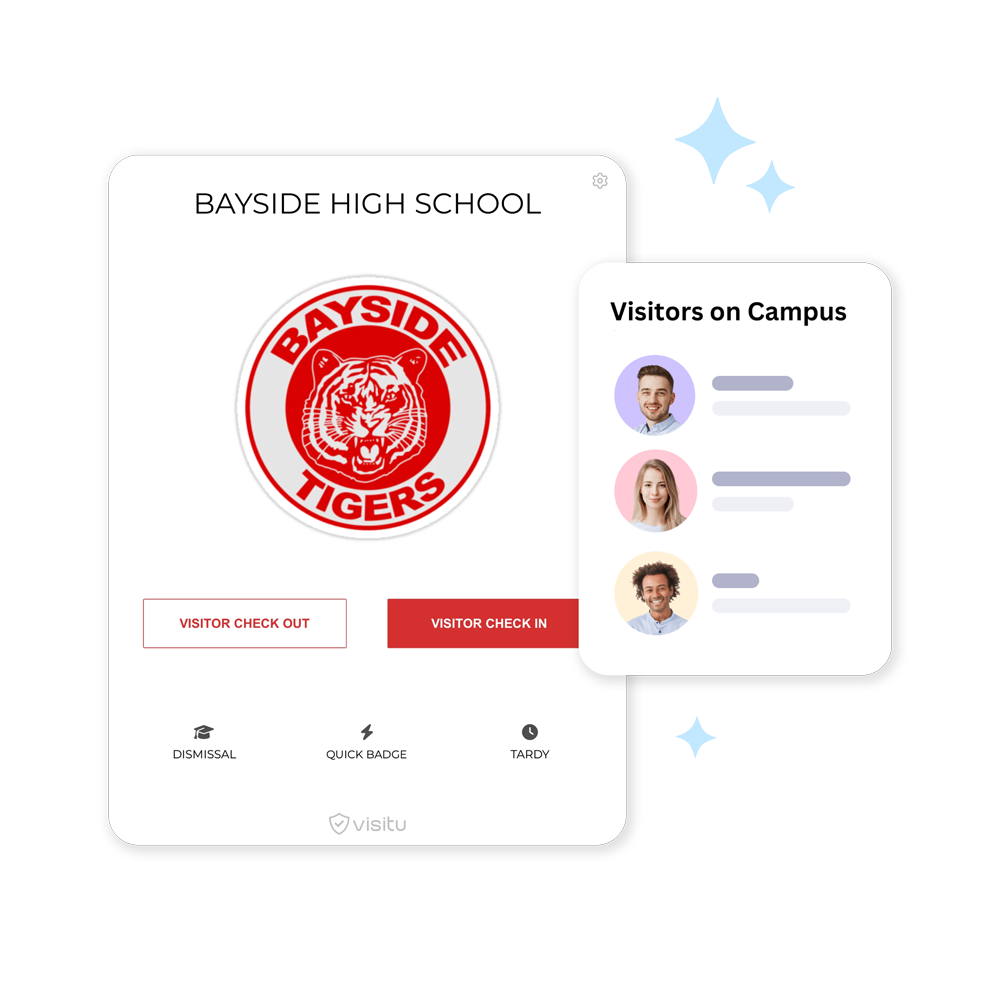
In most schools, the process begins when a visitor arrives at the front office. The visitor presents a government-issued ID, such as a driver’s license, which is scanned through the system. The software verifies the visitor’s information, checks for potential alerts, and creates a digital record automatically.
Once approved, the system prints a visitor badge that identifies the individual and documents the purpose of the visit. The visitor’s information is then stored in a secure digital log that administrators can access at any time.
It is important to understand the distinction between a visitor identification system and a full visitor management platform. A visitor identification system focuses specifically on verifying visitor identities and creating accurate visitor records.
A visitor management system includes identification capabilities but may also provide additional functionality such as visitor scheduling, reporting, emergency response support, communications, and broader campus safety integrations.
Both play important roles in helping schools improve security and operational visibility.
The Key Components of a Visitor Identification System
Modern visitor identification systems combine several technologies to create a secure and efficient visitor experience.
One of the most important components is digital check-in. Instead of relying on paper forms, visitors complete registration through a kiosk, tablet, or other digital device. This improves accuracy while reducing front office workload.
Identity verification is another critical feature. Schools can scan government-issued identification cards and validate visitor information before granting access to the campus.
Many systems also support security screening capabilities. These tools can compare visitor information against internal watchlists or public databases and immediately notify administrators if a concern is identified.
Badge printing provides another layer of visibility. Visitor badges typically include identifying information such as the visitor’s name, photograph, visit purpose, and check-in time. Some systems may also generate QR codes that support additional tracking and reporting functions.
Automation plays an increasingly important role as well. Visitors may pre-register before arriving on campus, reducing wait times and improving efficiency. Staff members can receive automated notifications when visitors arrive, helping streamline visitor coordination throughout the school day.
The combination of these capabilities creates a more secure and organized visitor process while reducing administrative burden.
How Visitor Identification Systems Improve School Security
The primary goal of a visitor identification system is to improve campus security through greater visibility and accountability.
The first benefit is real-time awareness. Administrators can quickly see who is on campus at any given moment and access accurate visitor information when needed.
This visibility helps schools maintain stronger control over campus access while reducing the risk of unauthorized entry. Visitor verification also creates a more consistent security process. Rather than relying on visual recognition or handwritten information, schools can confirm visitor identities using standardized procedures.
Many systems also support instant security alerts. If a flagged individual attempts to check in, administrators can receive immediate notifications and take appropriate action before access is granted.
The result is a safer and more controlled environment for students, staff, and visitors.
Schools gain greater confidence knowing they have accurate information about campus visitors throughout the day.
Supporting Emergency Response With Real-Time Visitor Data
Visitor accountability becomes especially important during emergencies. When schools experience lockdowns, evacuations, severe weather incidents, or other critical situations, administrators need immediate access to accurate information.
A visitor identification system provides real-time data that helps schools understand who is currently on campus and where those visitors were expected to be located. Administrators can quickly determine which visitors have checked in, which have checked out, and which may still be inside the building.
This information supports faster decision-making and more coordinated emergency response efforts.
Emergency drills also benefit from accurate visitor tracking. Schools can use visitor records to evaluate procedures, identify gaps, and improve preparedness over time.
The ability to access reliable visitor information during critical situations helps reduce confusion and strengthens overall campus safety planning.
Improving Accountability and Compliance
Beyond security benefits, visitor identification systems also help schools improve accountability and compliance.
Digital records eliminate many of the errors associated with paper-based processes. Visitor information is captured consistently and stored securely, making it easier to retrieve records when needed.
Administrators can access visitor histories, generate reports, and maintain documentation that supports internal policies and regulatory requirements.
This transparency helps reduce disputes and miscommunication while creating a more organized operational environment. For districts focused on strengthening governance and safety documentation, digital visitor records provide significant advantages over traditional paper logs.
How Visitor Identification Systems Improve Front Office Operations
School front offices are among the busiest areas on campus.
Staff members manage phone calls, parent interactions, student needs, deliveries, attendance issues, and countless other responsibilities throughout the day. Visitor identification systems help reduce administrative workload by automating many routine tasks.
Digital registration eliminates manual paperwork. Automated notifications improve communication. Visitor records are created instantly without requiring staff members to manually enter information.
These efficiencies allow front office teams to focus more time on supporting students, families, and school operations.
Visitors benefit as well.
Check-in processes become faster, more professional, and more consistent. Parents and guests spend less time waiting and gain confidence that the school is following secure procedures.
The result is a better experience for everyone involved.
Visitor Identification Systems vs Traditional Logbooks
The differences between visitor identification systems and traditional visitor logs are significant. Manual logbooks rely heavily on human accuracy and compliance. Visitors must provide information correctly, sign in consistently, and remember to sign out before leaving.
Digital visitor identification systems automate these processes while improving accuracy and accountability. Check-in times are faster. Visitor information is more reliable. Security verification becomes standardized. Real-time reporting becomes possible.
Most importantly, schools gain visibility that paper systems simply cannot provide.
As school safety expectations continue evolving, digital identification systems offer a level of security and operational control that traditional logbooks cannot match.
The Future of Visitor Identification Technology
Visitor identification technology continues advancing alongside broader school safety innovations.
Artificial intelligence is beginning to improve visitor verification and threat detection capabilities. Mobile-based check-in experiences are becoming increasingly common as schools seek faster and more convenient visitor workflows.
Some organizations are exploring biometric technologies such as facial recognition and touchless authentication systems. While implementation varies based on district policies and privacy considerations, these technologies continue gaining attention.
QR-code check-ins and mobile pre-registration are also helping schools improve efficiency while reducing front office congestion.
Perhaps most importantly, visitor identification systems are becoming more integrated with broader school safety ecosystems.
Visitor data can increasingly connect with emergency communication platforms, access control systems, surveillance technology, and operational dashboards.
This connected approach helps schools create a more comprehensive view of campus safety.
Visitor Identification as Part of a Complete School Safety Strategy
No single technology can solve every school safety challenge.
The most effective safety strategies combine multiple layers of protection working together to improve visibility, communication, and response readiness.
Visitor identification systems play an important role within this larger framework. They complement access control systems, security cameras, emergency management tools, visitor management software, and school safety protocols by providing accurate information about who is entering and moving throughout campus.
When these systems work together, schools gain a stronger operational foundation for protecting students, staff, and visitors.
Rather than functioning as standalone tools, visitor identification systems become part of a connected safety ecosystem designed to improve both prevention and response.
Stronger School Security Starts With Visitor Identification
School safety begins with awareness. Administrators cannot effectively manage campus security if they do not know who is entering school buildings and where visitors are located throughout the day.
Visitor identification systems help solve this challenge by providing accurate visitor verification, real-time visibility, stronger accountability, and improved operational efficiency.
They help schools move beyond outdated sign-in sheets and manual processes toward a more secure and organized approach to visitor management.
As districts continue investing in modern safety strategies, visitor identification technology will remain a critical component of protecting students, supporting staff, and creating safer learning environments.
By combining real-time visibility, stronger security procedures, and streamlined operations, visitor identification systems provide schools with a powerful tool for building safer campuses today and into the future.
Frequently Asked Questions About Visitor Identification Systems
What is a visitor identification system?
A visitor identification system is a digital solution that verifies visitor identities, tracks campus visitors in real time, and creates secure records of every visitor entering and exiting a school. These systems typically include ID scanning, badge printing, visitor screening, and digital visitor logs.
How does a visitor identification system improve school security?
A visitor identification system improves school security by verifying visitor identities, preventing unauthorized access, providing real-time visibility into who is on campus, and supporting emergency response efforts with accurate visitor data.
What is the difference between a visitor identification system and a visitor management system?
A visitor identification system focuses on verifying and tracking visitor identities. A visitor management system includes visitor identification capabilities but also provides additional features such as visitor scheduling, reporting, communications, emergency management support, and integrations with other school systems.
Can visitor identification systems screen visitors for security risks?
Yes. Many visitor identification systems can compare visitor information against internal watchlists, custody alerts, and other approved screening databases. Schools can receive immediate notifications when a flagged individual attempts to check in.
Do visitor identification systems help during school emergencies?
Yes. Visitor identification systems provide real-time information about who is currently on campus, helping administrators account for visitors during lockdowns, evacuations, reunification events, and other emergencies.
Are visitor identification systems only for large school districts?
No. Schools of all sizes can benefit from visitor identification systems. Private schools, charter schools, independent schools, and public districts use these systems to improve visitor accountability, streamline front office operations, and strengthen campus security.