

School campuses welcome visitors every day. Parents attend meetings, volunteers assist in classrooms, contractors perform maintenance, vendors make deliveries, and community members participate in school events. While these interactions strengthen school communities, they also introduce security and operational challenges that require careful oversight.
For many schools, visitor management has evolved far beyond paper logbooks and handwritten visitor badges. Today’s campuses need systems that provide visibility, accountability, and real-time awareness while making the check-in experience faster and more convenient. As expectations around school safety continue to rise, administrators are looking for technology that supports both security and daily operations without adding unnecessary work for staff.
Modern visitor management systems accomplish exactly that. They streamline visitor check-in, verify identities, maintain accurate records, and provide school leaders with the information they need to make informed decisions throughout the day.
If you’re exploring visitor management systems for schools, understanding the features that separate today’s platforms from traditional sign-in methods is essential. The right solution does far more than replace a clipboard—it becomes an integral part of a school’s broader safety and operational strategy.
Why Traditional Visitor Management Falls Short
For decades, schools relied on paper sign-in sheets located at the front office. While familiar, these systems present significant limitations in today’s educational environment.
Paper logs are inherently slow and prone to human error. Visitors may forget to sign in, write illegibly, or provide incomplete information. Office staff often spend valuable time verifying identities manually and answering repetitive questions during busy arrival periods.
Perhaps more concerning is the lack of identity verification. A handwritten name provides no assurance that someone is who they claim to be. Without screening visitors against appropriate safety databases or internal watchlists, schools may unknowingly grant access to individuals who should not be on campus.
Traditional systems also create visibility challenges. Once someone signs a paper log, administrators have little real-time awareness of who remains on campus, where visitors are located, or whether they have checked out properly. During emergencies, locating visitor information often means searching through paper records when every second matters.
Beyond security concerns, paper processes create unnecessary administrative work. Staff must organize records, retrieve historical information when requested, and manually maintain compliance documentation. These repetitive tasks reduce the time available for supporting students, teachers, and families.
What Defines a Modern Visitor Management System?
A modern visitor management system replaces manual processes with a secure digital platform designed specifically to manage campus visitors efficiently and accurately.
Rather than relying on paper logs, visitors check in using tablets, kiosks, front office computers, or even their own mobile devices. The system guides visitors through a standardized process while automatically collecting required information, verifying identities, and recording each visit.
Because every check-in is digitally captured, administrators gain immediate visibility into who is currently on campus. Visitor records are stored securely, searchable within seconds, and available whenever reporting or compliance documentation is needed.
More importantly, these systems support school safety by combining visitor verification, real-time monitoring, digital documentation, and emergency preparedness into a single workflow that reduces manual effort while improving situational awareness.
Core Features of Modern Visitor Management Systems
While platforms vary, the most effective visitor management solutions share several essential capabilities that help schools operate more safely and efficiently.
Digital Pre-Registration
One of the most valuable features is digital pre-registration. Rather than completing paperwork upon arrival, visitors can register before coming to campus.
Parents attending conferences, vendors delivering equipment, volunteers supporting classrooms, or contractors performing scheduled work can submit required information ahead of time. This allows office staff to prepare for expected visitors while significantly reducing wait times during busy periods.
Pre-registration also creates better visibility into daily campus activity, allowing administrators to anticipate visitor traffic and plan accordingly.
ID Scanning and Visitor Identification
Identity verification is one of the most significant improvements offered by modern visitor management systems.
Instead of relying on handwritten names, visitors present a government-issued identification card that is scanned electronically. The system verifies visitor information quickly and accurately while checking against approved safety databases or internal watchlists when applicable.
This automated verification process provides schools with greater confidence that individuals entering campus are properly identified before access is granted.
Photo Capture and Badge Printing
Visitor badges serve as an immediate visual indicator that someone has completed the school’s check-in process.
Modern systems automatically capture visitor photos during registration and print professional badges that include the visitor’s name, photograph, destination, purpose of visit, and date. Some schools also use color-coded badges to distinguish vendors, parents, volunteers, contractors, or event guests.
These badges allow teachers and staff to quickly recognize authorized visitors while making unidentified individuals easier to spot throughout campus.
Real-Time Visitor Tracking Dashboard
One of the greatest advantages of digital visitor management is complete visibility.
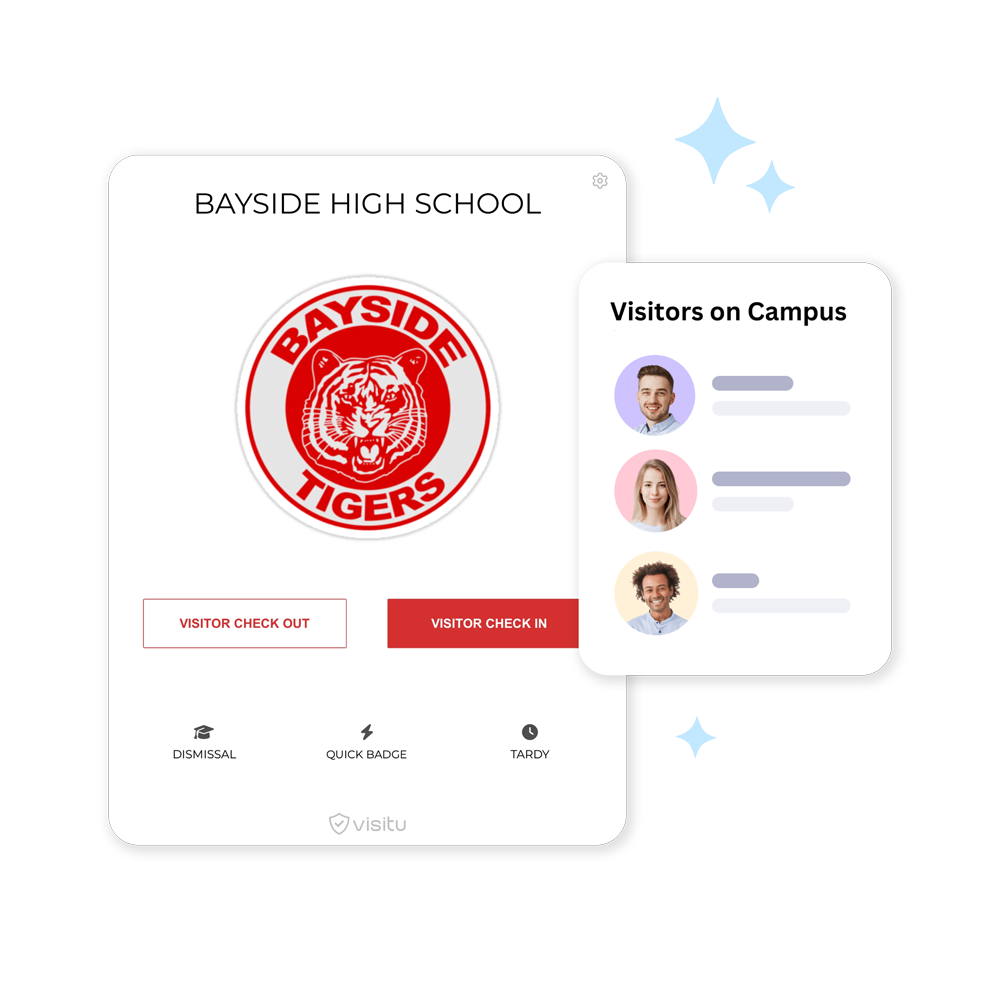
Administrators can instantly see who is currently on campus, when each visitor arrived, whom they are visiting, and whether they have checked out.
This real-time dashboard eliminates guesswork and provides administrators with accurate visitor information throughout the school day. Historical records are equally accessible, making it simple to locate previous visits without searching through filing cabinets or paper logs.
Automated Host Notifications
Communication improves significantly when visitor arrivals are automated.
Rather than calling classrooms or searching for staff members, modern systems automatically notify hosts that their visitor has arrived.
Notifications can be delivered through email, text message, or mobile applications depending on the school’s workflow. This minimizes front office interruptions while creating a smoother experience for both visitors and employees.
Hosts receive timely updates, visitors spend less time waiting, and office personnel can focus on other responsibilities.
Compliance and Digital Record Keeping
Schools often require visitors to acknowledge campus policies, confidentiality agreements, volunteer expectations, or other important documentation.
Modern visitor management platforms collect digital signatures during check-in and securely store these records alongside each visitor’s profile.
Because records are maintained electronically, schools can easily retrieve documentation during audits, investigations, or compliance reviews. Digital storage also reduces paper clutter while helping ensure information remains organized and secure.
Emergency Management Support
Perhaps the most valuable feature during a crisis is immediate access to accurate visitor information.
Whether responding to a lockdown, evacuation, weather emergency, or reunification event, administrators need to know exactly who is on campus.
Modern visitor management systems provide real-time visitor lists that support accountability during emergency response. School leaders can quickly determine which visitors remain inside buildings, helping first responders and administrators make informed decisions.
This level of visibility becomes increasingly important as schools continue strengthening comprehensive emergency preparedness plans.
System Integrations
Visitor management no longer operates as a standalone process.
Today’s platforms increasingly integrate with Student Information Systems (SIS), access control solutions, emergency communication platforms, security technologies, and other operational systems.
These integrations reduce duplicate data entry while creating a more connected school safety ecosystem where information flows automatically between systems.
Rather than managing multiple disconnected applications, schools gain a centralized view of daily campus operations that improves efficiency across departments.
How Modern Features Improve School Safety
Every feature within a visitor management system ultimately contributes to a safer learning environment.
Identity verification reduces the likelihood of unauthorized individuals entering campus. Digital badges make authorized visitors easy to recognize. Real-time dashboards provide administrators with immediate awareness of campus activity, while automated documentation creates reliable historical records.
When combined, these capabilities allow schools to move beyond simply tracking visitors toward actively managing campus access.
Platforms such as Pikmykid extend these capabilities by integrating visitor management into broader school operations and safety workflows. Instead of treating visitor check-in as an isolated process, schools can incorporate visitor information into a connected ecosystem that supports communication, operational efficiency, and emergency preparedness.
This integrated approach helps administrators maintain greater visibility while simplifying the daily responsibilities of front office staff.
Operational Benefits Beyond Security
Although school safety remains the primary objective, modern visitor management systems also deliver measurable operational improvements.
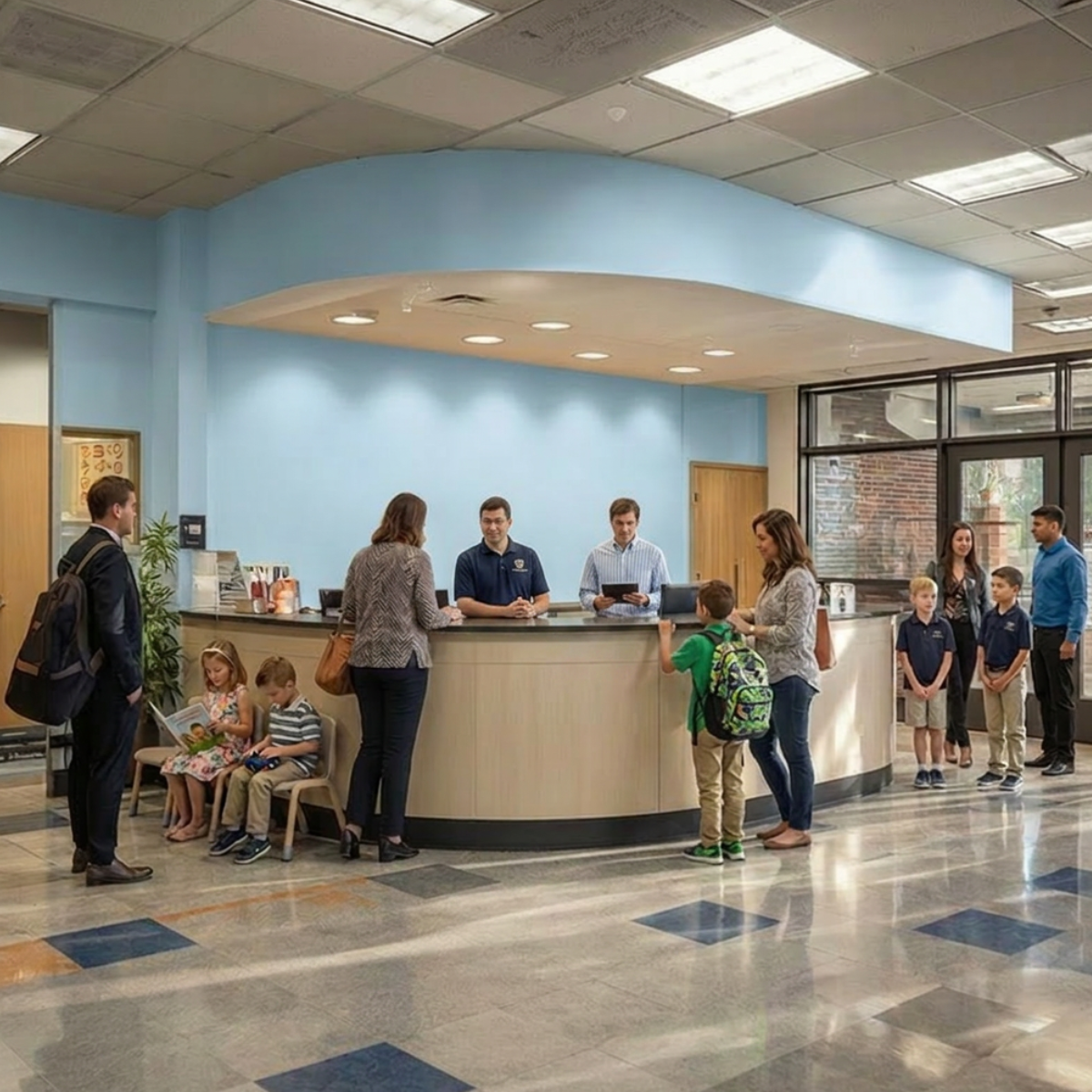
Check-in becomes significantly faster, reducing long lines during morning events, parent conferences, volunteer activities, and school programs. Visitors appreciate a streamlined process that minimizes delays while maintaining professional security procedures.
Administrative staff spend less time entering information manually, organizing paperwork, or answering repetitive questions. Automation reduces human error while allowing office personnel to focus on supporting students, families, and faculty.
Digital records eliminate filing cabinets filled with visitor logs while making historical information searchable within seconds. Whether investigating an incident or preparing compliance reports, administrators can retrieve accurate records immediately.
The visitor experience also improves. Professional check-in processes demonstrate that schools prioritize both security and hospitality, creating confidence among parents, community members, and visitors.
Common School Visitor Scenarios
Visitor management systems support a wide variety of daily campus activities.
Parents and guardians frequently visit schools for conferences, classroom events, student pickups, and meetings with teachers or administrators. A streamlined check-in process helps reduce congestion while maintaining appropriate security procedures.
Contractors and maintenance vendors often require temporary campus access to perform repairs or facility improvements. Digital visitor records ensure these visits are documented while maintaining accountability throughout the workday.
Volunteers supporting classrooms, libraries, athletics, or extracurricular programs benefit from consistent registration processes that simplify recurring visits while maintaining security standards.
Large school events such as performances, athletic competitions, graduation ceremonies, or community meetings often generate substantial visitor traffic. Digital systems help schools manage increased volumes more efficiently while maintaining organized records.
Temporary staff, substitute teachers, guest speakers, and educational partners can also be processed consistently through standardized workflows that reduce confusion and improve campus oversight.
The Future of Visitor Management Systems
Visitor management technology continues to evolve alongside broader advances in school safety.
Artificial intelligence is expected to enhance visitor verification by identifying unusual patterns, streamlining administrative reviews, and improving risk detection. Some organizations are also exploring facial recognition technologies where appropriate, although implementation varies based on district policies, legal requirements, and privacy considerations.
Mobile-first experiences are becoming increasingly common, allowing visitors to complete registration before arriving on campus using their smartphones.
Integration will also continue expanding. Visitor management systems will increasingly connect with emergency response platforms, access control systems, communication tools, and operational software to provide schools with a unified safety ecosystem rather than disconnected point solutions.
As these technologies mature, schools will gain even greater visibility while reducing administrative complexity.
Choosing a Visitor Management System That Supports Safer Schools
The expectations placed on today’s schools continue to grow. Administrators must balance welcoming visitors with protecting students, supporting compliance, improving operational efficiency, and maintaining readiness for unexpected situations.
Modern visitor management systems make that balance possible by replacing outdated manual processes with intelligent digital workflows that improve both security and convenience.
Features such as digital pre-registration, ID verification, visitor badges, real-time tracking, automated notifications, secure record keeping, emergency support, and system integrations provide schools with far more than an electronic sign-in sheet. Together, they create a comprehensive visitor management process that strengthens campus awareness while reducing administrative burden.
As schools evaluate new technology, the focus should extend beyond individual features to how those capabilities work together within a connected safety strategy. The most effective visitor management solutions help schools welcome visitors confidently while providing administrators with the visibility, accountability, and operational efficiency needed to create safer learning environments every day.
Frequently Asked Questions
What are the most important features of a modern visitor management system?
The most important features include digital pre-registration, ID scanning and verification, visitor badge printing, real-time visitor tracking, automated host notifications, digital record keeping, emergency management support, and integration with other school systems.
How do visitor management systems improve school safety?
Visitor management systems verify visitor identities, track who is on campus in real time, create searchable digital records, and provide administrators with accurate information during emergencies, reducing the risk of unauthorized access.
Can visitor management systems integrate with other school technologies?
Yes. Many modern visitor management platforms integrate with Student Information Systems (SIS), access control systems, emergency communication tools, and other school safety technologies to create a more connected operational environment.
Why should schools replace paper visitor logs?
Paper logs lack identity verification, are difficult to search, provide no real-time visibility, and increase administrative workload. Digital visitor management systems improve security, streamline operations, and maintain accurate records while providing schools with greater situational awareness.