


Why Are Schools Prioritizing Visitor Management More Than Ever?
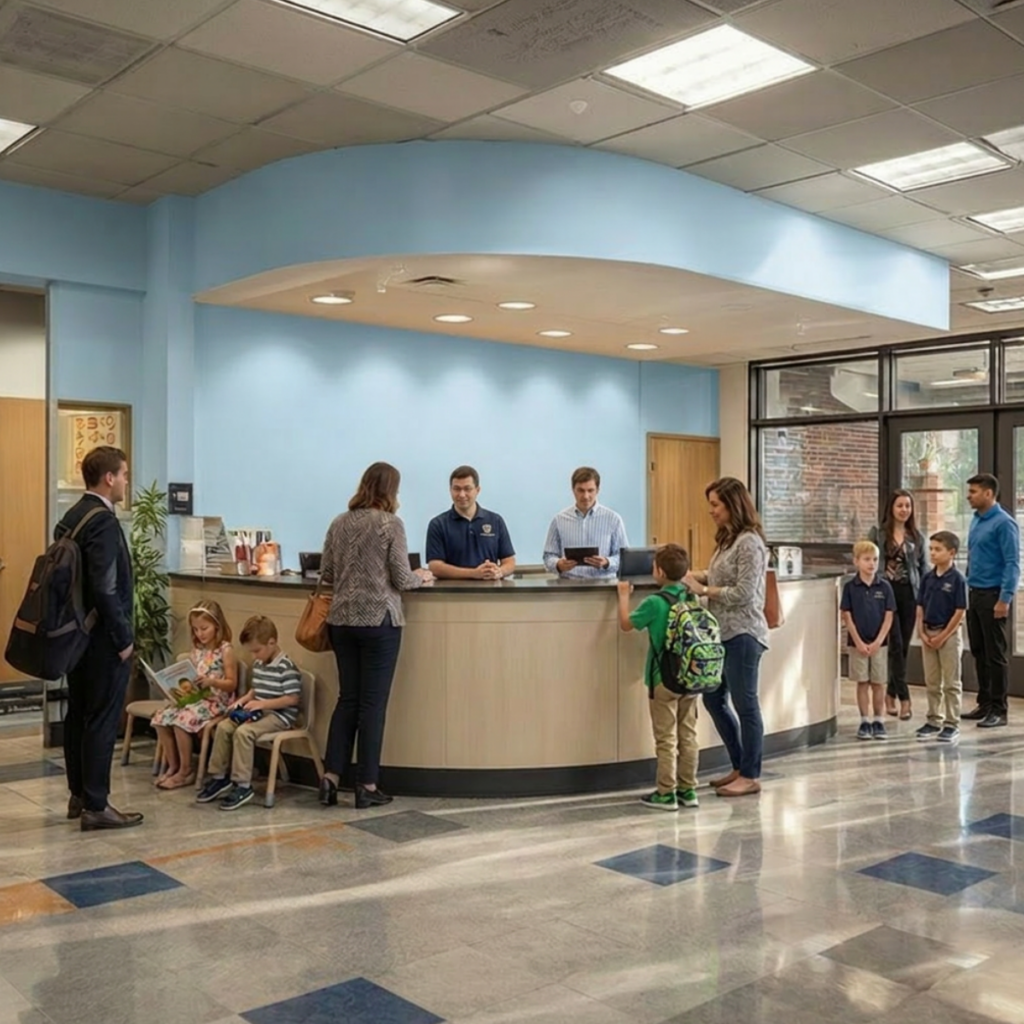
School safety conversations often focus on classrooms, emergency response plans, and campus access control. Yet one of the most important safety checkpoints in any school sits directly inside the front office.
Every visitor entering campus creates both an operational responsibility and a security decision. Parents arrive for conferences. Vendors make deliveries. Volunteers assist teachers. Contractors perform maintenance work. Community members attend events throughout the school year. While these visits may seem routine, schools still need to know exactly who is entering campus, where those individuals are going, and whether they have been properly authorized.
For years, many schools managed visitors using handwritten sign-in sheets and temporary paper badges. At the time, those systems felt sufficient. Today, however, school safety expectations have changed dramatically.
Administrators now face increased pressure to improve campus visibility, strengthen visitor accountability, and respond more effectively during emergencies. Schools can no longer rely on outdated manual processes that leave gaps in security and operational awareness.
That shift is why districts across the country are searching for the best visitor management system for schools.
Modern visitor management software helps schools move beyond paper logs and disconnected processes by creating secure digital visitor workflows. These systems provide real-time visibility into who is on campus while streamlining front office operations and improving emergency preparedness.
At the same time, they create a faster and more professional experience for parents, guests, and staff members entering school buildings each day.
Schools are beginning to recognize that visitor management is no longer simply an administrative process. It has become a foundational component of modern campus safety strategy.
What Problems Do Traditional Visitor Logbooks Create for Schools?
Many schools still rely on paper visitor logs because the process feels familiar. A visitor walks into the office, signs their name on a clipboard, receives a sticker badge, and proceeds through campus.
The challenge is that this process creates far more operational risk than most schools realize.
Paper logs offer very little real-time visibility. Once a visitor signs in, administrators often have no reliable way to confirm where that person went or whether they have already left campus. During busy periods, front office staff may struggle to monitor multiple visitors entering at once.
Manual visitor records also create documentation issues. Handwritten entries are frequently incomplete or difficult to read. Retrieving visitor records later can become frustrating and time-consuming, especially during compliance reviews or incident investigations.
Identity verification is another major concern.
Without digital verification tools, schools have limited ability to confirm whether visitors are providing accurate information. Unauthorized individuals may gain access more easily when staff members are relying entirely on visual recognition or handwritten forms.
These problems become even more serious during emergencies.
If a lockdown or evacuation occurs, administrators need accurate information immediately. They cannot afford to search through paper logs while trying to determine who remains inside the building.
Traditional visitor processes also create operational bottlenecks during high-volume periods. Parent-teacher conferences, school performances, assemblies, and sporting events often generate long front office lines that increase stress for both staff and visitors.
These growing challenges are driving schools toward digital solutions that improve visibility, efficiency, and accountability simultaneously.
What Makes the Best Visitor Management System for Schools?
Not every visitor management platform is built specifically for K-12 environments. Schools need systems that balance security, operational simplicity, and scalability.
The best visitor management system for schools should first and foremost be easy to use. Front office teams already manage constant interruptions and competing priorities throughout the day. A complicated system only creates additional frustration and slows adoption.
Strong security functionality is equally important.
Modern schools need visitor management software capable of verifying identities, screening visitors against watchlists, and providing real-time visibility into active campus guests. These features help schools proactively identify potential concerns while maintaining organized visitor processes.
Real-time reporting and visitor tracking are also essential. Administrators should be able to quickly identify:
- Who is currently on campus
- When visitors arrived
- Where visitors are expected to be
- Whether visitors have checked out
The best visitor management system for schools should also integrate seamlessly with broader school operations. Many districts now connect visitor management with:
- Student Information Systems (SIS)
- Emergency communication platforms
- Access control tools
- Attendance systems
- School safety workflows
Integration reduces duplicate work while improving operational coordination across departments.
Scalability matters as well. Districts need solutions capable of supporting multiple campuses, varying visitor volumes, and evolving safety requirements over time.
Most importantly, schools need systems that support both daily operations and emergency preparedness without creating unnecessary complexity for staff.
What Features Should Schools Look for in Visitor Management?
The strongest visitor management systems combine security and operational efficiency into one connected platform.
Digital visitor check-in is one of the most important features schools should prioritize. Instead of relying on paper sign-in sheets, visitors can complete registration through kiosks, tablets, or mobile devices. This creates cleaner records while improving visitor flow during busy periods.
Visitor identification and verification capabilities are equally valuable. Many systems scan government-issued IDs to confirm visitor identities before granting campus access. This process helps schools improve accountability while reducing unauthorized entry risks.
Instant badge printing also strengthens campus visibility. Visitor badges often include names, photos, destinations, and timestamps that help staff identify approved guests immediately.
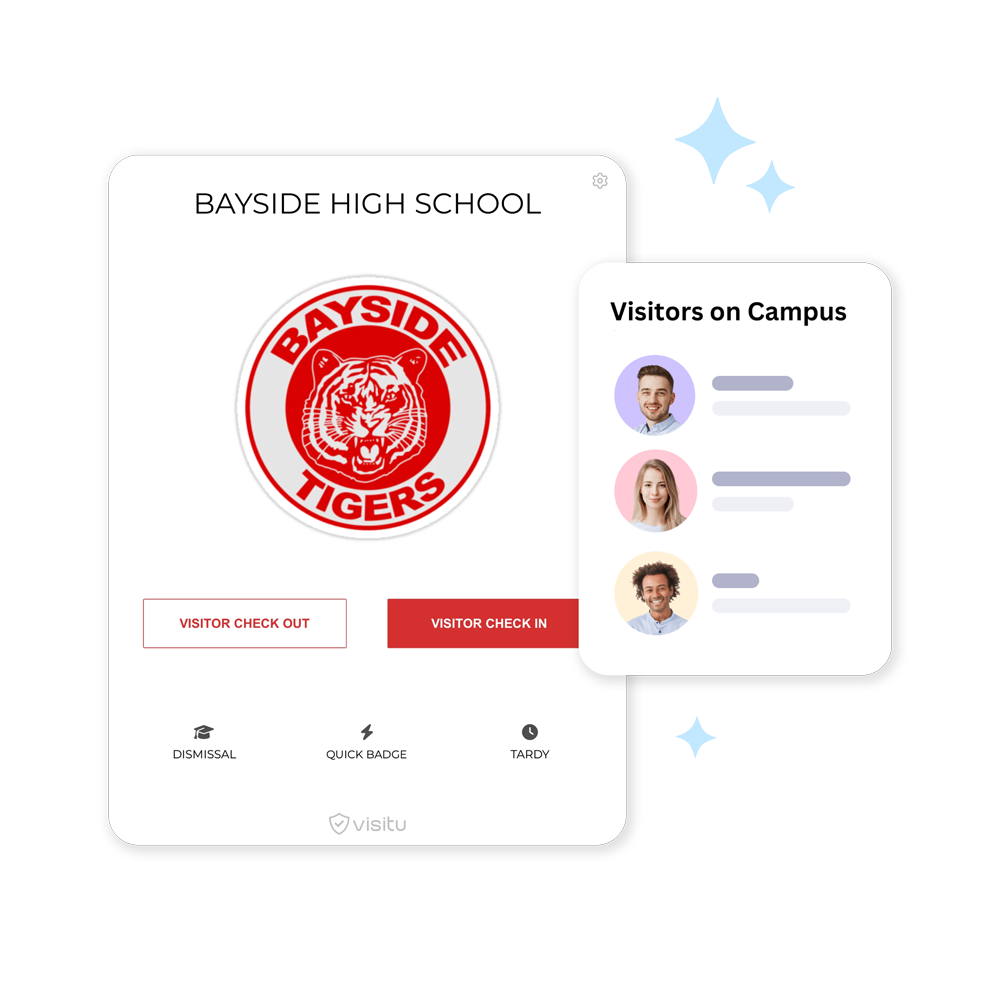
Real-time visitor dashboards provide administrators with immediate awareness of active campus visitors. During emergencies, this visibility becomes critical.
Many schools are also prioritizing visitor screening alerts. The best visitor management system for schools can notify administrators immediately if flagged individuals attempt to check in.
Emergency support capabilities continue growing in importance as well. Modern visitor management platforms increasingly connect with lockdown protocols, emergency alerts, and reunification procedures.
Schools should also look for systems that support mobile-friendly experiences and pre-registration workflows. Parents and guests increasingly expect streamlined digital experiences that reduce waiting times at the front office.
Platforms like Visitu and integrated ecosystems connected through Pikmykid help schools combine visitor accountability with broader campus safety visibility.
How Does Software Improve School Safety?
The most significant benefit of visitor management software is improved campus visibility.
Schools cannot effectively secure their environments if they do not know who is entering buildings or moving throughout campus during the day. The best visitor management system for schools creates structured workflows that help schools maintain greater awareness of visitor activity in real time.
Identity verification helps schools confirm who is entering campus before access is granted. Visitor screening tools can also identify restricted or flagged individuals before situations escalate.
Real-time visitor logs allow administrators to instantly see who is currently on campus and where visitors are expected to be located. This level of awareness becomes especially valuable during emergencies.
If a lockdown, evacuation, or reunification event occurs, administrators need accurate information quickly. Digital visitor management systems provide immediate access to visitor records that help improve emergency coordination and accountability.
Visitor management software also supports stronger operational consistency across campuses. Instead of relying on varying manual procedures between schools, districts can standardize visitor workflows and improve compliance across the organization.
The result is a more secure and controlled campus environment where staff members have better visibility and visitors experience more organized procedures.
How Should Schools Choose the Right Platform?
Every school environment operates differently, which means there is no one-size-fits-all solution.
Schools should begin by evaluating their own operational needs. A small private school may prioritize simplicity and affordability, while a large district may require enterprise-level integrations and multi-campus reporting capabilities.
Visitor volume also matters significantly. Schools managing large event attendance or frequent daily visitors may need more advanced workflow automation and pre-registration capabilities.
Security requirements should remain central to the evaluation process. Schools should determine whether they need:
- ID verification
- Visitor screening
- Watchlist alerts
- Emergency visibility dashboards
- Reunification support
- Multi-campus reporting
Integration capabilities are equally important. The best visitor management system for schools should connect smoothly with existing district technology rather than creating additional operational silos.
Schools should also consider implementation support and staff training. Even the strongest platform can struggle if onboarding processes are unclear or workflows feel overly complex for front office teams.
Finally, districts should evaluate long-term scalability. Technology investments should support future growth rather than requiring replacement after only a few years.
The right system is not simply the most advanced platform. It is the solution that aligns best with the school’s operational environment, staff workflows, and campus safety goals.
Why Are Digital Systems Better Than Traditional Logbooks?
The difference between digital visitor management systems and paper logbooks extends far beyond convenience.
Speed is one of the most immediate improvements schools notice after implementation. Digital workflows reduce front office wait times and accelerate visitor check-ins significantly.
Accuracy also improves substantially. Instead of relying on handwritten entries, schools maintain structured digital records that are searchable, organized, and accessible in real time.
Security visibility becomes dramatically stronger as well. The best visitor management system for schools allows administrators to instantly identify active visitors, verify identities, and monitor campus access more effectively.
Administrative workload decreases because staff members spend less time managing paperwork, retrieving records, or handling repetitive data entry tasks.
Most importantly, digital systems improve emergency preparedness. Accurate visitor records help schools coordinate faster and more effectively during high-pressure situations.
As school safety expectations continue evolving, manual visitor logs simply cannot provide the operational visibility modern campuses require.
What Are the Future Trends in Visitor Management Software?
Visitor management technology continues evolving alongside broader school safety innovation.
Artificial intelligence is beginning to improve visitor verification and operational analytics capabilities. AI-driven systems may eventually help schools identify unusual visitor behavior patterns or operational risks before incidents occur.
Mobile pre-registration and QR-based check-ins are also becoming more common as schools prioritize faster and more convenient visitor experiences.
Some platforms are exploring biometric verification technologies such as facial recognition and touchless authentication workflows. While adoption may vary based on district policies and privacy considerations, these tools continue gaining attention as schools modernize security strategies.
Integration across broader safety ecosystems will likely continue expanding as well.
The best visitor management system for schools will increasingly operate as part of a connected operational environment that includes emergency communication, attendance management, access control, and campus analytics platforms.
This connected visibility helps schools improve coordination, communication, and response readiness across daily operations and emergency situations alike.
Why Schools Need the Best System
School safety is no longer limited to locked doors and emergency drills. It now includes operational visibility, visitor accountability, and real-time awareness across the entire campus environment.
That shift makes visitor management more important than ever.
Traditional paper logs can no longer provide the speed, verification, or visibility schools need to operate safely and efficiently. Schools require systems that help them understand who is entering campus, where visitors are going, and how to respond quickly when situations change.
The best visitor management system for schools helps districts strengthen campus security while improving operational efficiency and creating better experiences for staff, parents, and visitors alike.
These systems support faster visitor check-ins, stronger emergency preparedness, improved compliance, and greater front office organization. Most importantly, they help schools build safer and more connected learning environments for everyone on campus.
As school safety expectations continue evolving, investing in modern visitor management technology is becoming one of the most important operational decisions districts can make.